

Free Consultation
Hablamos Español
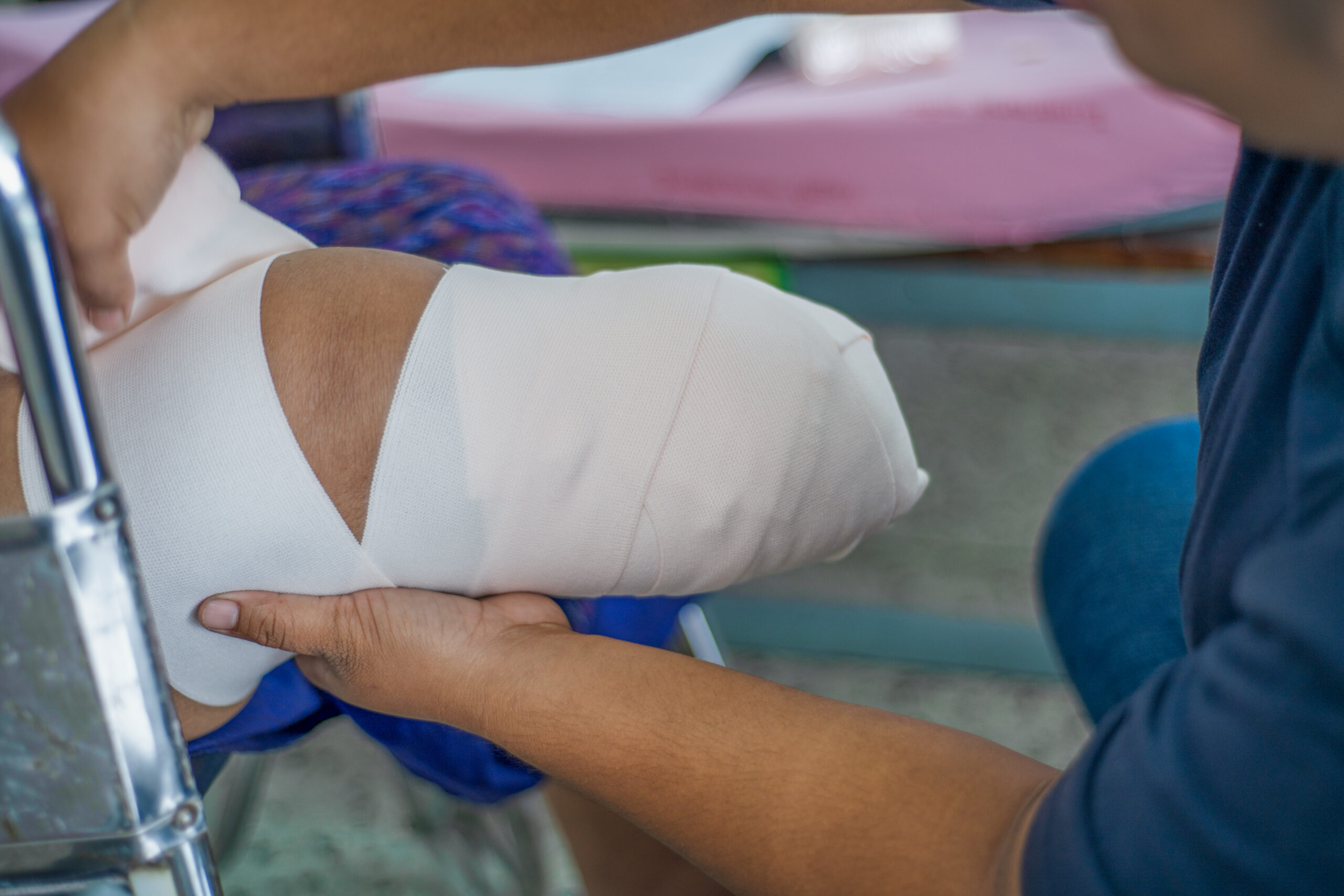
Elastic,Bandaging,In,Diabetes,Mellitus,Bk,Amputation
Amputation Injuries

North Carolina Workplace Amputation Injury Attorney

Anyone who must work alongside any type of heavy machinery is at increased risk for various serious and catastrophic injuries, including amputations and permanent disfigurement. While amputations are certainly not limited to industries in which heavy equipment is used, those industries are responsible for the vast majority of these types of injuries.

The Occupational Safety and Health Administration (OSHA) reports that approximately 7 amputations occur on a daily basis across the country; however, it’s thought that the actual number of amputations occurring in the workplace could actually be much higher.

If you’ve suffered an amputation due to a work injury, contact one of our experienced workers’ compensation attorneys at Wilder Pantazis Law Group. We specialize in both workers’ compensation and personal injury cases. Your first consultation is free.

Learn More About Our Firm

Ready to take the first step?

Contact Wilder Pantazis Law Group today for a free, confidential consultation and let our experienced team guide you forward.

Contact Us Now
Best Lawyers - Wilder Pantazis Law Group
Rated by Super Lawyers


loading ...
Best Lawyers - Annemarie Pantazis
Rated by Super Lawyers


loading ...
10.0Annemarie Pantazis

Types of occupational amputations

Fingers are by far the most common body part amputated by workplace accidents, but other common amputations involve the toes, hands, and feet. Traumatic amputations are generally categorized as complete or partial, depending on the severity of the injury.

“Minor” amputations are those that occur to the distal or tarsometatarsal joint (forefoot, transmetatarsal, and Lisfranc), whereas a “major” amputation is one that occurs proximal to the tarsometatarsal joint (Chopart, Boyd, Syme, below and above the knee).

Anytime a worker loses a body part—regardless of which part—the results can be catastrophic and life-changing. Not only must you cope with medical treatment, but you may find that you need long-term assistance completing the tasks you could once do on your own with ease. In many instances, you may face the prospect of a permanent disability as a result of the amputation.

Common causes of amputation in the workplace

While amputations in the workplace may be the result of a wide variety of equipment and activities, these occupational injuries typically occur when employees are operating mishandled or unguarded heavy equipment.

This equipment might include:

  • Conveyors
  • Power press brakes
  • Food sliders
  • Roll bending machines
  • Meat grinders
  • Drill presses
  • Band saws
  • Milling machines
  • Grinders
  • Shears

Additionally, amputations may occur when using trash compactors, forklifts, and both non-powered and powered hand tools. Employees may be at risk for amputation while setting up, cleaning, adjusting, preparing, or clearing jams in the equipment.

Are amputations covered by workers’ compensation in North Carolina?

If you experience a loss of limb or amputation as part of your work duties, that injury is typically covered by workers’ compensation in North Carolina. While not every employer is insured, most are required to carry workers’ compensation coverage under state law.

Workers’ compensation can provide coverage for surgical procedures, medical expenses, prosthetics, and physical therapy. Additionally, workers’ comp can also provide coverage for lost wages and disability. In some cases, workers may be able to receive a lump-sum payment for their loss.

Calculating your amputation compensation claim

The precise amount an injured worker may receive is two-thirds of their average weekly wage. It’s not uncommon for workers’ compensation insurance companies to calculate this figure incorrectly, which is why it’s best for you and your lawyer to double-check the amount.

Generally, an employee’s weekly wage is based on two-thirds of the average weekly amount they earned during the 52 weeks (1 year) before the accident. For this reason, it’s a good idea for employees to provide copies of their pay stubs or any payment information that can verify their earnings.

Wage replacement benefits are usually calculated as two-thirds of an employee’s average weekly wage, though maximum limits do apply.

Contact Us

What you need to know

Get clear, straightforward answers to the questions we hear most often.

Still Have Questions? Contact Us

How much compensation can you receive?

The amount of compensation you may be owed depends on several factors, including the severity and the nature of the injury. Generally, victims of occupational amputation can be reimbursed for past wages based on two-thirds of their average weekly wage, along with a payment for a permanent partial disability (PPD). PPD is paid due to the loss of ability to perform one’s job or for a loss of range of motion.

In determining compensation, the level and type of loss may also be crucial.

Does compensation differ based on which body part you lose?

In short, yes.

Workers’ compensation for a finger amputation might be more than a fingertip amputation compensation due to the fact that you have lost a greater range of motion. Similarly, the benefits owed if you lose your entire hand or arm should be proportionally higher than if you lost a finger. Ultimately, which body part had to be amputated plays a significant role in the benefits you are owed and for how long.

Can you be compensated for your pain and suffering after an amputation?

The short answer is no.

In order to seek payment for your pain and suffering, you would need to file a third-party injury lawsuit that is separate from workers’ compensation. Unfortunately, you aren’t usually able to file a lawsuit against your employer unless you can show that they displayed grossly negligent or malicious behavior which resulted in your injury.

These special circumstances include the following situations:

  • Your employer is harassing you or you are fired after filing a workers’ compensation claim
  • Your injury is a result of egregious or intentional behavior on the part of your employer
  • Your employer has discriminated against you on the basis of a disability
  • Your employer didn’t have workers’ compensation insurance coverage

Even if you aren’t able to sue your employer, workers’ compensation doesn’t prevent you from filing a lawsuit against a separate third party who may be liable for your injury. If your injury was the result of defective equipment or a vehicle accident, for example, then you may have grounds for a case against another at-fault individual or company.

Real people.
Real stories.
Real gratitude.

We’re proud to stand by our clients, and even more proud to be part of their journey toward healing and justice.

Read More Testimonials

In your corner,
close to home

Representing injured workers and serious injury cases across North and South Carolina

Areas We Serve

Schedule a free
consultation today

You don't pay unless we win

"*" indicates required fields